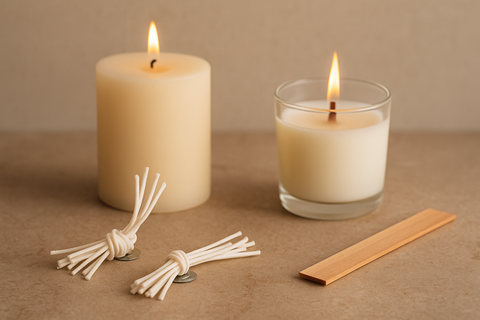
The heart of a candle is not just the fragrance it emits or the shape it takes: it's the wick. This seemingly simple fiber sustains the ritual of the flame, defines the burning experience, and determines the harmony between wax, aroma, and light. In the artisanal universe of candles, where every detail is an aesthetic and technical choice, the question is inevitable: wood wicks or cotton wicks?
The flame as language: fundamental characteristics of each wick
Cotton wicks, due to their fibrous and braided composition, offer a serene and constant flame. Their behavior is more predictable, and when choosing them, the artisan has greater control over the burning diameter, a crucial factor in ensuring that the candle burns evenly and safely. This technical predictability makes cotton the preferred choice for those seeking consistency in candle design, especially when working with containers or molds of precise shapes.
In addition, there is a wide variety of cotton wick suppliers, including local production, which facilitates the selection of specific gauges, finishes, and treatments (such as waxing or pre-treatment with vegetable wax). This availability not only provides diversity but also sustainability, by allowing for short distribution circuits.
On the other hand, wood wicks provide an unparalleled sensory dimension: the gentle crackle of the flame reminiscent of a fireplace fire transforms any candle into an intimate refuge. This almost hypnotic sound quality adds a layer of emotional warmth that turns the lighting into a meditative act.
However, working with wood wicks requires a more experimental approach. Their behavior can vary depending on the type of wood, its thickness, and the wax used. This implies conducting careful tests to find the ideal balance between absorption capacity, flame height, and stability during combustion. Unlike cotton, the supply of wood wicks is more limited and rarely local, so it is often necessary to resort to specialized stores or international manufacturers to ensure quality and reliability.
Duration and combustion: two sides of the same fire
In terms of duration, the difference is not as drastic as one might think, but there are nuances. Cotton wicks, by burning slower and generating a more centered flame, usually allow for greater efficiency in wax use, which translates into a slightly longer lifespan, especially in small or medium-sized candles.
Wood wicks, on the other hand, can consume wax at a somewhat faster rate if they are not perfectly adjusted to the diameter of the container. Therefore, for large format candles or those intended to be lit for long periods, it is essential to experiment with various combinations until the exact proportion is found. The combustion of a wood wick can also generate a wider flame, which, although aesthetically attractive, may not be ideal in all decorative contexts.
Sound, atmosphere, and emotions
Where the wood wick undoubtedly triumphs is in its ability to create atmosphere. The soft crackling sound activates memories, suggests contemplation, and establishes an emotional connection with ancient fire. It's not just a candle: it's a presence in the space.
For their part, cotton wicks maintain the elegance of silence, making them ideal for moments where concentration is sought, such as meditation or nighttime reading. Their calm and straight flame projects a uniform light that enhances the forms of the environment without distraction.
Tips for choosing the right wick
In the world of artisanal candles, there are no universal answers. Each wax, each fragrance, and each container interact differently with each type of wick. Therefore, the key lies in informed and conscious experimentation. Candles with cotton wicks offer a more controllable and predictable experience, ideal for those starting in the art of candle making or seeking a sober and refined aesthetic.
Wood wicks, on the other hand, are perfect for those who value sensory nuances and want to add a touch of intimate theatricality to their creations. However, it is always advisable to avoid buying from generalist platforms where reliable technical data is not offered: the ideal is to go to specialized suppliers or experienced manufacturers.
Experience it yourself: the art of trying and creating
At Vento Barcelona, we know that the best way to choose is by trying. That's why, in our workshops, we not only teach how to make candles from scratch, but we also offer the possibility of working with different wicks, waxes, fragrances, and pigments, so you can discover the combination that best suits your style and the ambiance you wish to create.
If you are interested in delving into this sensory experience and learning to design unique candles with attention to every detail, we invite you to one of our most comprehensive workshops: the Artisanal Aromatic Candle Workshop. In it, you will learn not only how to perfume a candle, but also how to choose the right wick, control the burning diameter, and create a piece that speaks of you.
The perfect candle is not bought, it is discovered. And in that discovery, the wick is the whisper that guides the flame.