In the delicate art of candle making, achieving a perfect harmony between wax and fragrance is essential to create pieces that not only beautify spaces but also envelop the senses with captivating aromas. This balance not only guarantees a pleasant olfactory experience but also ensures the safety and quality of the candle's burn.
Understanding Fragrance Load
Fragrance load refers to the percentage of fragrance oil incorporated relative to the total weight of the wax used. This percentage varies depending on the type of wax and the desired aroma intensity. For example, for soy wax, a fragrance load between 6% and 10% is commonly recommended. This means that for every 100 grams of wax, between 6 and 10 grams of fragrance would be added.
Basic Formula for Calculation
To determine the exact amount of fragrance to use, the following formula is employed:
Fragrance amount (g) = Wax weight (g) × (Fragrance percentage / 100)
For example, if you have 500 grams of wax and want an 8% fragrance load, the calculation would be:
500 g × 0.08 = 40 g of fragrance
It is important to note that this calculation is based on weight, not volume, as the density of fragrances can vary significantly.
Considerations by Wax Type
Each type of wax has a specific capacity to retain fragrances:
-
Soy wax: Retains fragrances well, ideal for container candles.
-
Palm wax: Offers good scent retention and a crystalline appearance.
-
Coconut wax: Has excellent fragrance retention capacity, providing an intense aroma.
-
Blends (wax mixtures): Combine the properties of different waxes to optimize fragrance retention and burn quality.
It is crucial to consult the wax supplier's specifications to determine the optimal range of fragrance load it can accommodate.
Signs of Excessive Fragrance
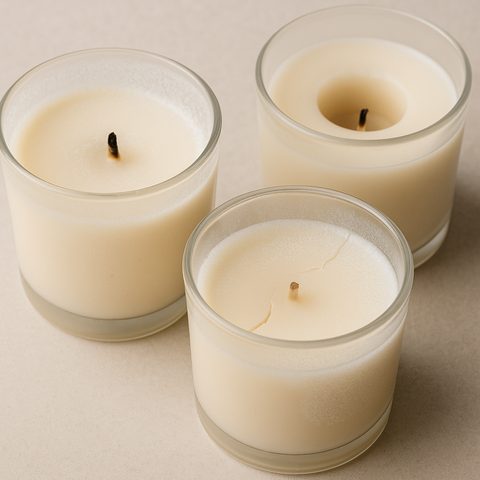
Adding too much fragrance can compromise the quality of the candle. A common sign of excess is "sweating" of the candle, where the fragrance separates and appears on the surface, giving the appearance of melted wax. This not only affects the aesthetics but can also alter the burn and scent throw.
Importance of Testing
Testing is essential to ensure the candle functions correctly. This includes evaluating the cold and hot scent throw, the stability of the fragrance in the wax, and the quality of the burn. Adjusting the fragrance load according to the results of these tests is key to achieving a high-quality candle.
Fragrance Incorporation Temperature
The temperature at which fragrance is added to melted wax is crucial. Generally, it is recommended to incorporate the fragrance when the wax reaches between 80°C and 85°C. Adding it at higher temperatures can cause the aromatic compounds to evaporate, reducing the intensity of the aroma.
Vento Barcelona Workshops: Perfect Your Technique
For those who wish to delve deeper into the art of candle making and learn how to precisely calculate fragrance load, Vento Barcelona offers specialized workshops. In the Aromatic Candle Workshop, participants learn about wax selection, fragrance incorporation, and techniques to optimize burn and scent throw. These workshops, taught by expert artisans, provide a practical and enriching experience to perfect your skills in crafting handmade candles.
In candle making, every detail counts. From the selection of the wax to the exact amount of fragrance, each decision influences the final result. By understanding and applying these principles, not only is the quality of the candles improved, but the sensory experience they offer is also enriched. Thus, each candle becomes a work of art that illuminates and perfumes spaces with elegance and harmony.